INTEGRATING MIGRANT CHILDREN
Cecília Aguiar e Patrícia Arriaga
by Sara Belo Luís
translation Arisai Vogel
photograph Luísa Ferreira
“WE NEED TO ADDRESS THE CHALLENGES OF GROWING DIVERSITY IN OUR CLASSROOMS”
To support the inclusion of migrant children in schools, they developed a board game to facilitate dialogue and ultimately help spark curiosity about others
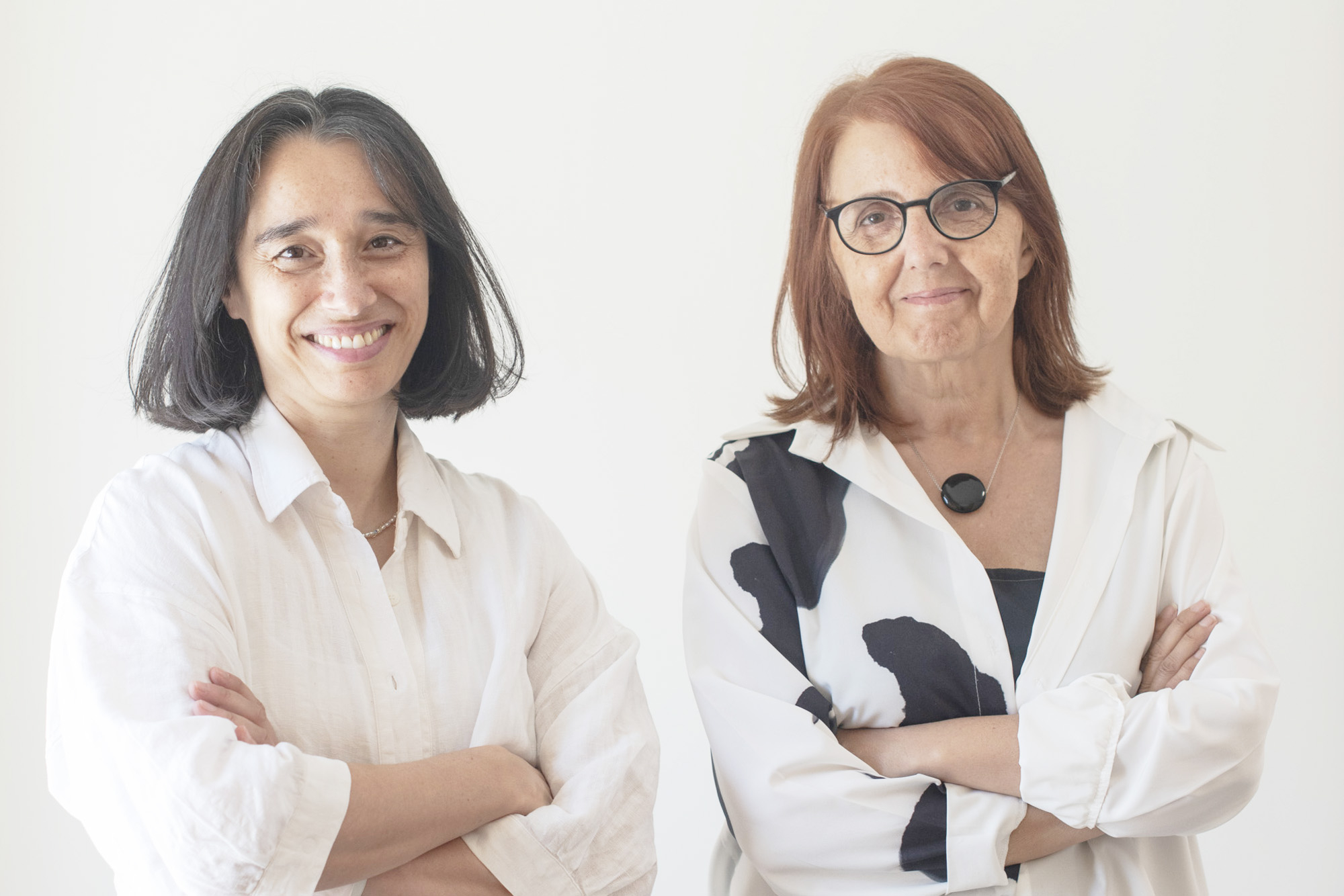
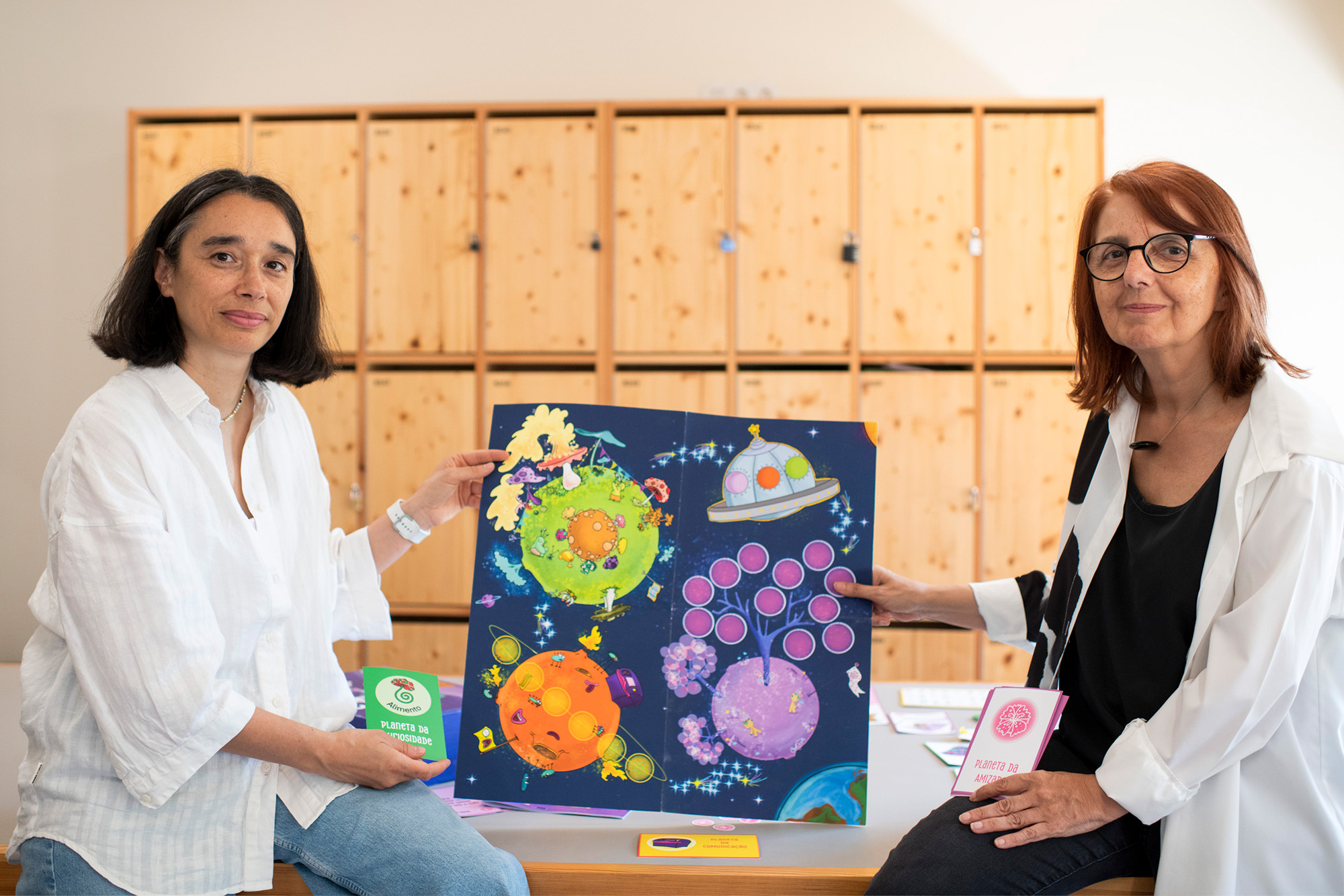
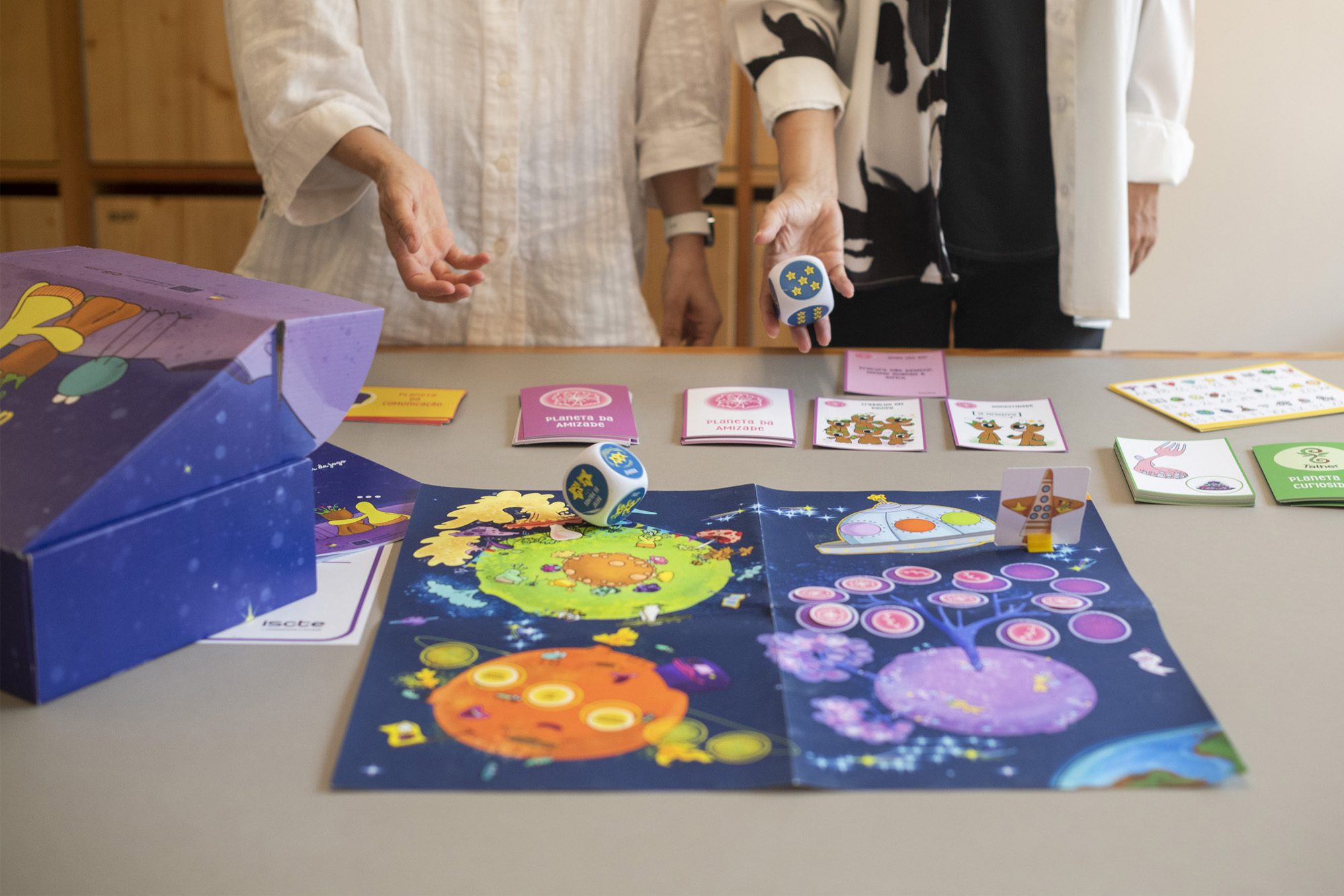
For two years, Cecília Aguiar and Patrícia Arriaga participated in a research project — KidLe — which aims to support the inclusion of migrant children in new school environments. They worked with two school districts in Lisbon and organized workshops with teachers, parents, and children. In the end, they created a board game where everything happens in space — there are planets, aliens, players and, of course, the urgent need to communicate and live with others. They’re also hoping to follow up on KidLe soon with another project to assess its impact on raising awareness about diversity.
Did KidLe stem from the idea that children learn better through games than by sitting at a desk?
Patrícia Arriaga: If by “behind a desk” you mean a classroom, I think all contexts are important for children to learn. I wouldn’t pit different forms of learning against each other — children learn in different contexts. The board game is just a tool.
So, what purpose does it serve?
Patrícia: The board game serves a playful and participatory purpose. It can be used in a classroom setting, but it can also be used for leisure activities, at school or with the family.
Cecília Aguiar: It’s an important supplementary tool. Research suggests that playful activities that capture children’s attention contribute to their motivation. From that perspective, by fostering greater engagement, such activities can be linked to better learning.
Patrícia: I’d like to add something. When they’re seated at their desks, children tend to do activities individually. This game aims to promote inclusion, but it also aims to bring children together around a table, communicating with one another. It’s not a competitive game, but a collaborative one.
What motivated the launch of this project?
Cecília: From a more practical standpoint, it began with an invitation from our Cypriot partner, who saw that we had the know-how to coordinate this project. From a more substantive standpoint, it stems from the need to address the challenges of inclusion and the growing diversity in classrooms. We need to find tools to support the work of parents and teachers and encourage positive interaction among children from different backgrounds — fostering curiosity about each other and helping them share who they are and their preferences. All of this aims to help them get to know each other better and build friendships.
How did you establish networks with the two school clusters in Lisbon that you worked with?
Patrícia: At the Center for Research and Social Intervention (CIS-Iscte), we already had a colleague, Ricardo Rodrigues, who was also part of the KidLe team and works with schools on these aspects of multiculturalism.
Cecília: This project is about supporting school clusters to think through their intervention strategies and develop improvement plans. Ricardo helped us identify schools with high levels of diversity — we looked for schools that were already actively working towards these kinds of goals. On top of that, we also looked for schools with groups that aren’t always taken into account.
What groups are those?
Cecília: Children from Bangladesh, for example. In fact, we ended up choosing Bengali as one of the languages to consider, because it’s so invisible and isn’t sufficiently valued.
This game aims to promote inclusion,
but it also aims to bring children together around a table, communicating with one another.
They also introduced a digital version of the game. What is the aim of this, given that you can’t sit the children round a table anymore?
Patrícia: The idea behind the digital version is for us to reach more families and more schools. In practice, the game is actually five games in one, and not all schools have the resources to print these materials.
Cecília: We also organised awareness-raising seminars for educators, teachers and parents, during which they immediately saw the possibility of using the game and the digital platform to interact with other students and schools in other countries. They saw that potential straight away.
Was there anything that surprised you over the course of the project?
Patrícia: I think we were constantly surprised by the children’s enthusiasm… And also by the imagination they showed when the tasks involved drawing, for example.
Cecília: One of the things the facilitators who took part in the workshops told us about was physical movement. They kept telling us that the children wanted to move around.
Patrícia: Ah, yes, they were worried because a board game involves sitting still, doesn’t it?
Cecília: We knew this, but the feedback became so consistent that we thought of a way to incorporate movement into the game. It could be just clapping your hands, but it could also involve jumping together or even taking deep breaths, as a way of relaxing.
Patrícia: Well-being and health aren’t just about being active — they’re also about relaxation. I’ve done a bit of research into positive emotions and, in fact, there are cultures that prioritise calmness and deep breathing.
In particular, Eastern cultures.
Patrícia: Exactly. This aspect of the game also aims to reflect that diversity.
Cecília: They’re small details. We’ve been trying to balance theory and research findings with the insights we’ve gained from the workshops. This has been a period of active game development, but we also felt it was important to effectively assess the impact of using these materials and the conditions under which positive changes happened.
We want to try to understand how far we can assess whether the participants — facilitators and children alike — have become more sensitive to issues of diversity.
You mention the importance of games in creating a certain degree of social cohesion. What conclusions have you been able to draw so far in this regard?
Cecília: Part of our plan for next year is to welcome students who also want to contribute to this work. At the moment, we mainly have qualitative feedback.
Patrícia: Even so, we don’t expect a game, on its own, to have a massive impact. It can make a contribution, but it’s still just a game, isn’t it? Research in this area has shown that the quantitative effects of game-based interventions tend to be modest, although they’re observable and relevant.
And a more general effect of raising awareness of issues relating to inclusion, diversity and tolerance?
Patrícia: Exactly...
Cecília: That “awareness” we’ve been discussing.
What does that mean?
Cecília: We want to try to understand how far we can assess whether the participants — facilitators and children alike — have become more sensitive to issues of diversity. Whether they’ve become more curious about others, and whether they want to learn about their experiences and preferences.
There are people who are different from me, and they’re interesting.
Cecília: Yes, from a qualitative point of view, the feedback from the children is positive. They enjoy playing, and they value helping one another in the various activities. They can also contribute in other ways, for example through gestures as well as language.
So, by overcoming the language barrier…
Cecília: Exactly. They can use gestures, they can draw pictures… Even the shyest children can contribute in different ways. This aspect of mutual support, even among those who don’t speak the same language, was very evident in the workshops.
Is the fact that this project was also developed outside the walls of academia an important aspect for you?
Cecília: It’s an essential aspect. In fact, this project is clearly aligned with our objectives and interests within CIS-Iscte, in the group we’re part of, which is called Community, Education and Development.
The next step will be to carry out a more in-depth analysis of the impact and the conditions under which that impact occurs.
It will also be interesting to identify what kind of training is needed to ensure that facilitators are effectively prepared to fuel positive and constructive conversations that reduce prejudice towards children from more diverse backgrounds.
Patrícia: Another of our objectives has always been to avoid making the characters in the game human. It would be difficult to represent all that diversity through a single physical appearance… It was a challenging exercise to see how far we could pull it off. I think the hardest part was creating symbols that could represent letters from other languages.
Cecília: Ultimately, we wanted to avoid anything that might act as a constraint, whether due to cultural references or the risk of focusing on a Western visual framework. That’s why all the elements are new.
Why did you choose space as the setting for the game?
Cecília: It was the children who chose the space setting. There were other possibilities, such as the savannah, for example… Space is the place of the imagination par excellence.
Patrícia: Yes, that worked very well. Ultimately, it also appeals to an imagination that isn’t very concrete.
Do you feel that, in some way, this is also a project of resistance?
Cecília: Yes, all of a sudden, around us, these objectives aren’t exactly top priorities. But we feel that this project is consistent with the work we’ve been doing. And also with literature and research, with what we know contributes to people’s well-being.
|
Cecília Aguiar e Patrícia Arriaga CIS-Iscte |
KidLe Aims to support the inclusion of migrant children in new school environments. The project also intends to help educators and parents use play-based activities (in this case, board games) for child learning and development. |