BEHIND DEVELOPMENT PROJECTS
Yonatan N. Gez
by Sara Belo Luís
translation Arisai Vogel
photograph Luísa Ferreira
“NOTHING IS ABANDONED – PLACES TELL MANY STORIES”
What are the “afterlives” of international development projects? On the ground and among populations, what concrete traces and intangible memories remain? At AfDevLives, our multidisciplinary team explores how the effects of these interventions endure over time.
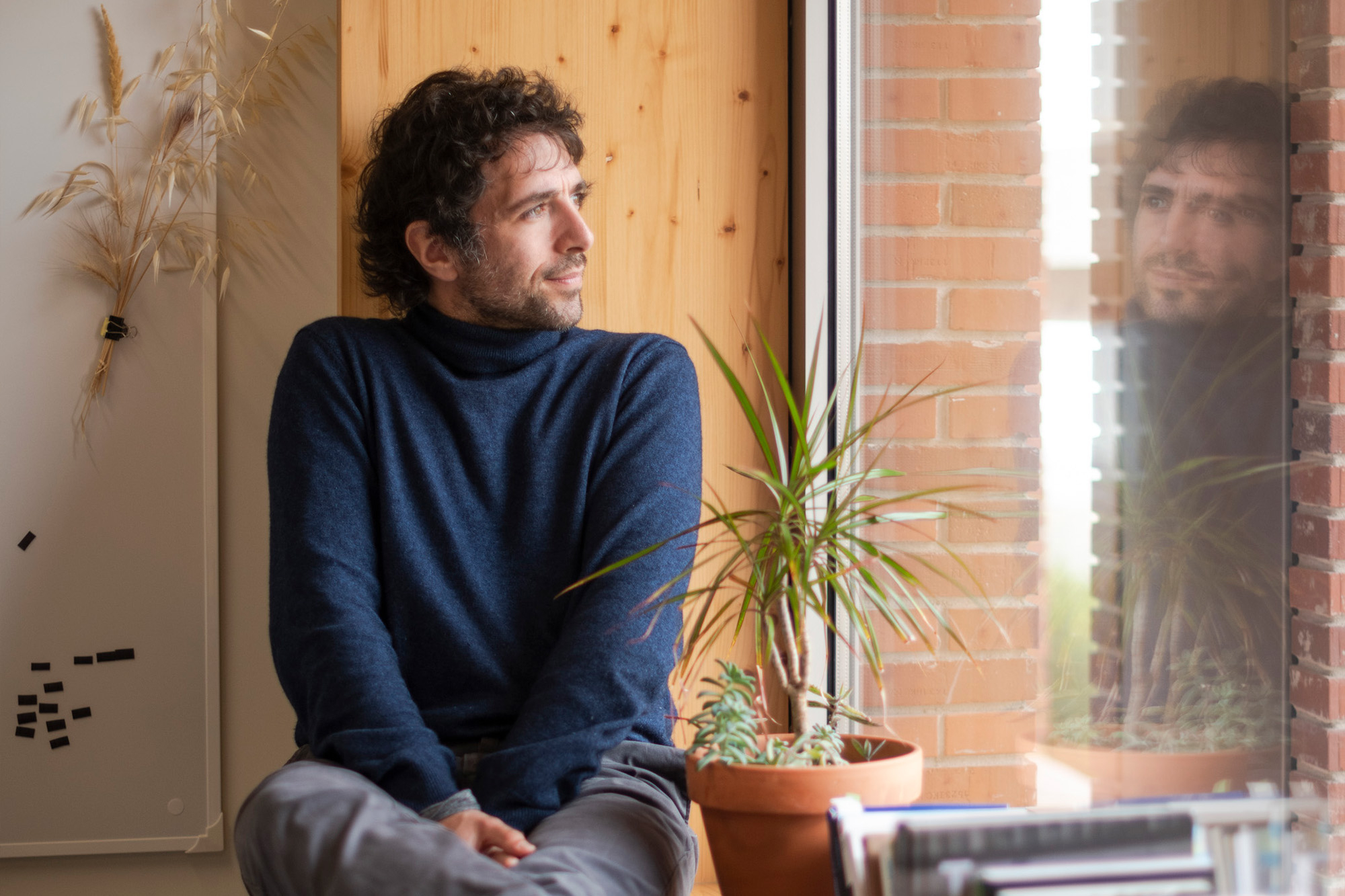
In short, it could be said that AfDevLives is a project about time. Funded by a 2021 European Research Council (ERC) grant it goes till the end of August 2028, and focuses on social anthropology but involves various disciplines and fieldwork spanning three East African countries: Kenya, Tanzania and Mozambique. In this interview, the Portuguese-Israeli researcher Yonatan N. Gez explains how development interventions have emphasised certain ideas and, over the years, have come to be understood by local actors.
You completed your PhD focusing on religious rituals, a more traditional topic in anthropology. How did you come to be interested in development projects in African countries?
When I finished my PhD back in 2014, I returned to Israel, the country where I was born. It was there that I met a colleague working on the legacies of Israeli state development projects across several African countries. In the 1960s, right around the time most African countries gained independence, Israel was still a fairly new nation and got involved in all sorts of ways, from construction projects to the arms trade. All of that’s changed over the last few decades, but I was completely fascinated.
Did you visit any of those countries at the time?
Yes, I got in touch with that friend and asked if she could help. I visited Tanzania and Zambia, and went to various places where there’s a very clear legacy — reminders of those memories and that connection with experts of Israeli origin. In Zambia, for example, we found buildings similar to kibbutzim or moshavim, a sort of collaborative, cooperative village. When it comes to buildings, it’s easier to grasp, but sometimes there’s a sense of strangeness, a temporal disconnect… A sort of “I’m here” and, at the same time, I’m also in “another place”, perhaps even associated with “another time”.
Why a sense of strangeness?
I’m quite critical of this identification of Africa, as if, on the one hand, it were a kind of romanticisation and, on the other, a kind of essentialisation. But there’s also a great deal of interest in these kinds of tensions on the part of the local people I spoke to. Imagine: a major project comes to your village and one day they just leave without explaining anything; the government itself offers no explanation. All of this makes for a very strange experience. And that’s why, at times, rumours also spread with incredible force. The people who live in these places end up telling stories about what happened because, quite simply, it makes no sense.
At a time when we are seeing a decline in development investment, we need to take stock, analysing not only the successes but also the failures and the long-term consequences.
Do these experiences occur more often with development programmes or more with research projects?
That’s an interesting point too. Because from our perspective, there’s a very clear distinction between research and development practice, but to the people living in those places, we’re just outsiders — representatives of our home countries. And both groups are expected, upon our return, to deliver a message: “When you go back to your country, tell them this and that”.
As if they belonged to another world.
Yes, but I think it might also be interesting, at a time when we’re seeing a decline in development investment, to take stock of the five, six or seven decades we’ve now spent on this sort of project. We need to analyse successes, but also the failures and the long-term consequences. All the issues surrounding the concept of the white saviour, for example…
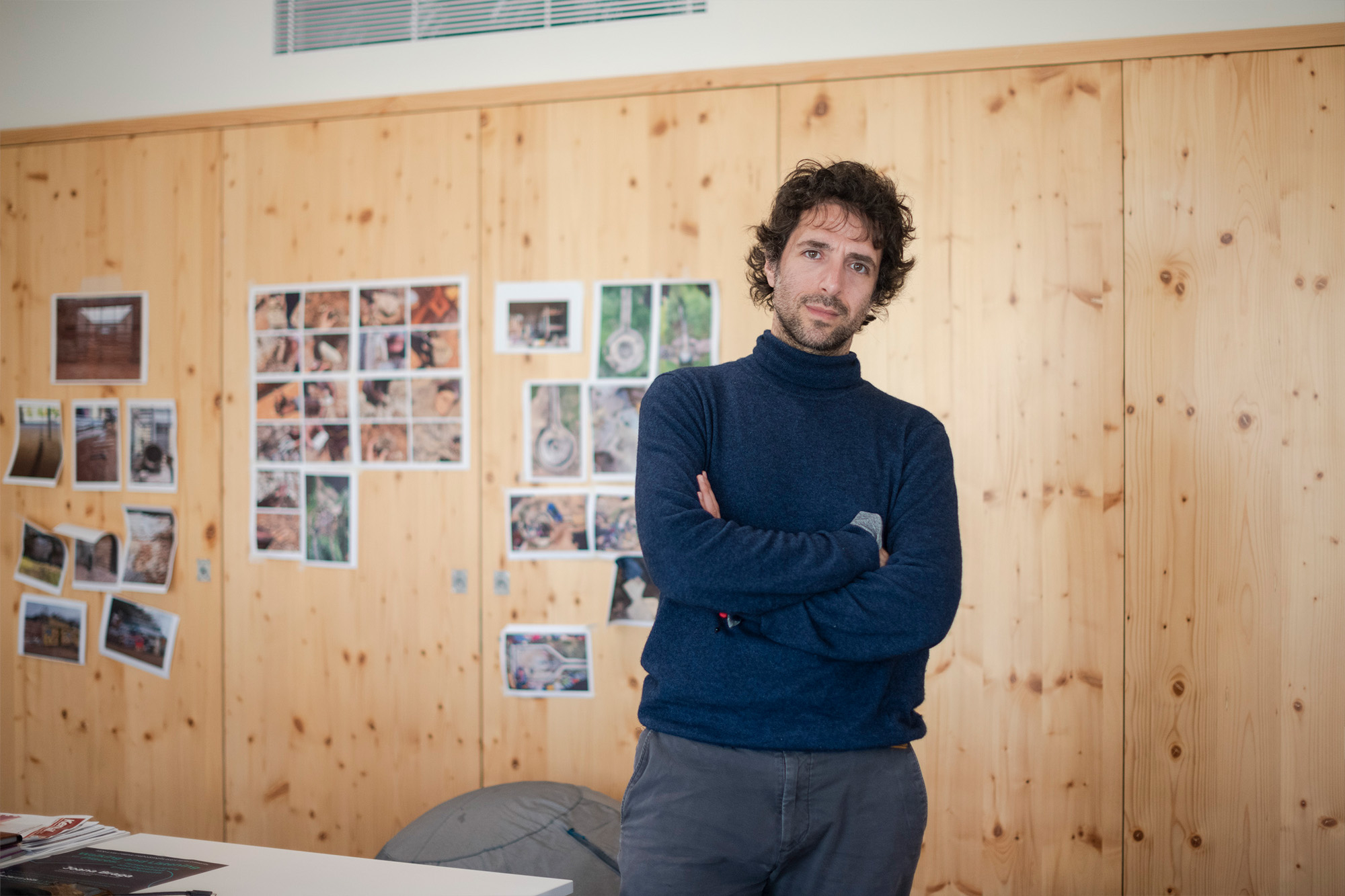
Has the fieldwork for AfDevLives already been completed?
We still have two postdoc researchers who’ll be heading out into the field this autumn and winter. At the same time, we also have local collaborators in Kenya, Tanzania and Mozambique who’ve only just begun their fieldwork.
I read an article in which you refer to a novel by Abdulrazak Gurnah, Afterlives, the writer who won the Nobel Prize in Literature in 2021. To what extent did this influence the name of the research project?
He’s an author of Tanzanian origin, which is why I found it interesting. When I read it, I was working with a colleague who specialises in African literature, and that’s where the inspiration came from. It’s a story about the various generations of a family — a good example because it shows how things endure across generations and, sometimes, there are connections that are difficult to explain. Echoes between events that occur over time, without an explicit link; a name that recurs and isn’t always understood — at times it seems almost magical… I like the concept because it helps us reach a somewhat intangible space.
Out of time?
Out of time, yes, almost spiritual. As I explained, I tried to move away from the context of religious research. The truth is that in religion, these moments are more clearly identified, but we find them here too. We don’t give them names, and we don’t categorise them as we would in a formal religion, as a ritual. There are even researchers who speak of development as a certain kind of religion, because it persists despite evidence that it doesn’t work. It’s a kind of faith.
Without evidence.
Well, that school of thought is very critical, but it’s almost as if development were an ideology — a form of fanaticism.
How do you intend to organise the project from now on?
We’ll be helping to organize the next European Conference on African Studies, which is due to take place at Iscte in the summer of 2027. We’re also planning an exhibition and, a few days later, a final AfDevLives seminar. Beyond publishing in academic journals, we need to think about what else we can do.
Could you give an example?
Organising exhibitions, for instance — we have a lot of visual material to present. We’ve already discussed this amongst ourselves. In particular, we have a Kenyan PhD student working on heritage and memories of the railway in early modern Kenya. He’s been working for over three years with people who live next to a railway station; they know him and expect him to speak to the authorities and bring something back.
Do the researchers themselves raise expectations amongst these communities?
Yes, and whilst this presents an opportunity, it’s also a risk. In this kind of work, we open up…
…A Pandora’s box?
A Pandora’s box, yes, filled with personal and collective pain. And also many expectations — things like “When are you coming back?”, “Why are you doing this?” and “Can you pass this and that on to them?”
It’s easy to say that we’re just researchers, that we have no say in matters, but on the other hand we’re there, and so we do bear some responsibility.
What should a researcher’s stance be?
Well, there are power dynamics, aren’t there? On the one hand, it’s easy to say that we’re just researchers and have no decision-making power over things, but on the other hand we’re there — and, therefore, we do have some responsibility. The issue of communication, for example, is important. We don’t have to do everything in the same way either…
That’s probably what makes the most sense — adapting our approach to each individual case.
Yes, case studies vary greatly and each researcher also has different responsibilities and approaches. I think that’s for the best. The PhD student I mentioned, for example, thought about writing a book and wanted to give a copy to each of the people he interviewed, but I’m not sure if that will have much impact…
A book doesn’t hold the same value for both sides.
Exactly. For your interviewees, some of whom don’t speak English very well, being given a 400-page book might even be seen as a bit humiliating… You’ll have to think about how to pass on what you’ve learnt to the community. You could organise a workshop, an activity — I don’t know; there’s no single answer. Nor are there any easy answers.
At AfDevLives, they also made a point of adopting exploratory methodologies. Could you give some examples?
Yes, we always knew that the project would benefit from adopting methods capable of sensing these temporal tensions — these discrepancies. In the case of the Kenyan student I’ve been talking about, he worked with a local artist who painted several pictures and then held an exhibition. It was fascinating because, afterwards, a dialogue opened up between the artistic output and the interviewees’ memories. For example, he imagined a railway station that used to be incredibly lively, which probably points to a certain romanticisation…
Is there a lot of nostalgia?
Nostalgia is, in fact, a word we’ve been using a lot. In the summer of 2025, we also organised an event with 30 people in Tanzania, where we used audio walks to explore post-industrial heritage — methods that are rarely used, particularly in African contexts. The idea was to create hatred narratives that people would listen to through their headphones. As they moved around the space, they were accompanied by these narratives and felt this dissonance between what no longer happens now and what still does. Most of these sites were factories that are no longer in operation, but the almost mythical, imagined and romanticised history continues to live on in people’s hearts.
Are they abandoned factories?
They’re factories that are no longer in operation. Nothing’s abandoned — these places tell many stories, spark the imagination and can even be taken over by animals and nature, which move into these spaces as humans withdraw.
It’s as if total abandonment — emptiness, really — didn’t exist.
We also need to convey a little hope. There’s always the possibility of imagining. Perhaps the fault even lies with us, with our limited concepts — what’s perhaps lacking is our capacity to imagine. In the case of the railway stations project our PhD student also shows how these spaces become highly valuable for commercial purposes, for example.
Sometimes they are even useful spaces insofar as they provide shelter.
Very useful, in fact. When people say these spaces are useless, I ask: useless to whom? In Tanzania, too, we have another project on the reuse of train-related materials. There’s a lot of wood and metal — and its quality is sometimes linked to the fact that it comes from a specific source. We might assume that it’s good-quality material because it’s colonial and, therefore, worth stealing or reusing. This is a rather perverse idea…
And ambiguous, to say the least.
Especially when we’re talking about people who feel forgotten. It’s strange to say that we miss a presence when that presence is associated with an oppressive colonial regime. ///
|
Yonatan N. Gez CEI-Iscte |
AfDevLives Aims to understand how development project interventions highlight certain ideas, reinforce specific prejudices and are perceived by local communities over time. |